
How South Carolina’s Prisons Became Command Centers for Organized Crime
COLUMBIA, S.C. (ConnectToTheCapitol.com) — Hollywood’s portrayal of mob bosses running criminal empires from lavish mansions, backroom restaurants and heavily guarded compounds has a new rival with criminal operations that have been headquartered within prison walls in South Carolina.
It has the making of a new mob cinematic classic, because of its not-so-cinematic reality. Llavish mansions have been replaced with multimillion-dollar prisons. Backrooms restaurants are today’s cell blocks and recreation yards. And the heavily guarded compounds? They’re still heavily guarded. Only now, the guards work for the government.
Our courts have convicted criminals. Our correctional system has locked them away. And yet, from behind razor wire and concrete walls, criminal empires continue to operate… with taxpayer-funded housing, food, and 24-hour protection.
From inside our state prisons, incarcerated gang leaders have ordered killings, directed international drug trafficking, extorted victims and managed criminal enterprises reaching far beyond their prison cells.
Al Capone needed messengers. Don Corleone needed trusted lieutenants.
South Carolina’s imprisoned crime bosses need something considerably smaller… a cellphone.
And for years, that’s been enough. Until now.
On November 19, the Federal Communications Commission unanimously approved a new framework allowing state prisons to jam contraband cellphone signals, subject to safeguards.
It was a major victory for South Carolina corrections and law enforcement officials who have spent nearly two decades fighting for the authority to disconnect criminals who continued doing business behind bars.
The Mob Never Went Out of Business
In June 2025, South Carolina’s 35th State Grand Jury released a report documenting organized criminal enterprises operating inside the state’s prisons.
It reads like a Hollywood crime script. Inside our state prisons, incarcerated gang leaders have coordinated with international drug cartels, directed violence, extorted victims, orchestrated scams, and run criminal operations across state lines.
The criminal networks, supported by outside accomplices and corrupt insiders who helped move contraband and facilitate illegal activity, relocated their command centers right inside state prison cells.
In fact, the grand jury found some gang leaders were making more money inside prison than they had on the streets. Their report describes inmates exercising command and control over criminal enterprises overseeing the distribution of fentanyl, methamphetamine and cocaine with contraband cell phones… all while remaining securely incarcerated on the taxpayer dime.
The Drug Lords Behind Bars
While the state had imprisoned the criminals, law enforcement and corrections officials say they’ve lacked the tools to imprison their businesses.
The scale of the problem became clear in a massive federal investigation into the Insane Gangster Disciples, a sprawling racketeering conspiracy involving murders, kidnappings, drug trafficking and firearms offenses.
With its incarcerated gang leaders using contraband cellphones inside prison to direct criminal operations beyond prison walls, Insane Gangster Disciples’ accomplices continued to carry out criminal activity on the outside. Eventually, the federal operation to take down the gang landed forty guilty pleas from defendants, confiscated more than 130 firearms, and took approximately 40 kilograms of methamphetamine off the street.
A Mob Hit in Sumter
For South Carolina corrections Captain Robert Johnson, the danger came straight to his front door.
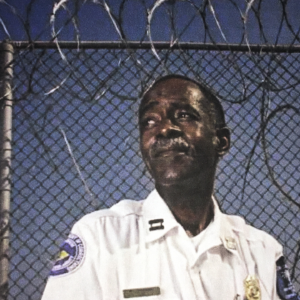
In 2010, Johnson was working to intercept contraband at Lee Correctional Institution. An inmate wanted him dead. Using an illegal cellphone, the prisoner arranged an assassination attempt.
The gunman went to Johnson’s home in Sumter and shot him six times. Johnson survived, but the attack left him with devastating injuries and a lifetime of pain. He has undergone 38 surgeries.
The implication that a corrections officer, enforcing prison security, became the target of a murder plot organized from inside the very prison where he worked is outrageous.
The inmate didn’t need to escape. He just needed a phone.
Johnson has now spent years fighting for corrections facility to have the authority to jam those signals, becoming a prominent voice in the national debate.
Seven Dead. The Phones Kept Ringing.
The danger hasn’t been confined to communities outside prison walls.
In April 2018, seven inmates were killed during a violent disturbance at Lee Correctional Institution in Bishopville. It was one of the deadliest prison riots in modern American history.
The same technology that had allowed criminal leaders to direct operations outside prison was also helping gangs coordinate operations inside it.
Seven men died, and the fight over whether South Carolina could block those cell phone signals continued.
The Criminals Had the Technology. The State Didn’t Have the Authority.
For years, South Carolina corrections officials have known about the problem.
Former Department of Corrections Directors Jon Ozmint and Bryan Stirling have fought for years to address the growing concern of inmates using illegal phones to run criminal enterprises.
They have pushed for technology to block the signals, investing millions in alternative technology designed to detect unauthorized phones and working with wireless carriers to disable them. But federal communications restrictions prevented them from independently deploying cellphone jammers.
The concern was that jamming could disrupt legitimate wireless communications beyond prison property, including emergency calls.
But the 2025 grand jury report described a process that could take as long as two days to disconnect an identified phone. When scheduling a drug shipment, threatening a witness, or ordering an attack can be done in minutes, two days is an eternity.
South Carolina law enforcement leaders have spent years pressing Washington to change the rules, pioneering early test cases for jamming technology in 2008 and again in 2019. Their goal: to demonstrate how signals could be blocked inside prisons without disrupting nearby communities.
The grand jury added its voice in 2025, calling for federal action.
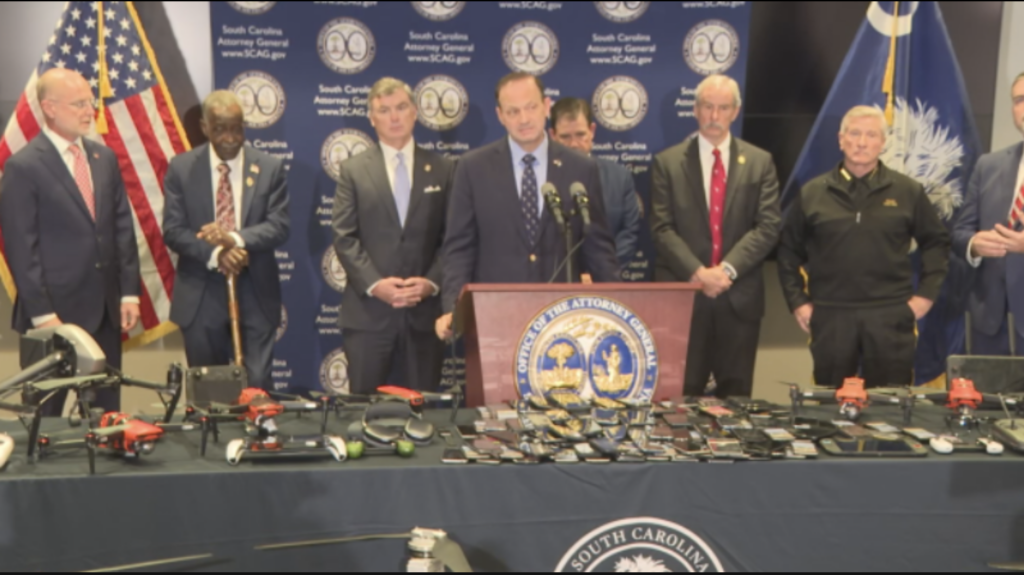
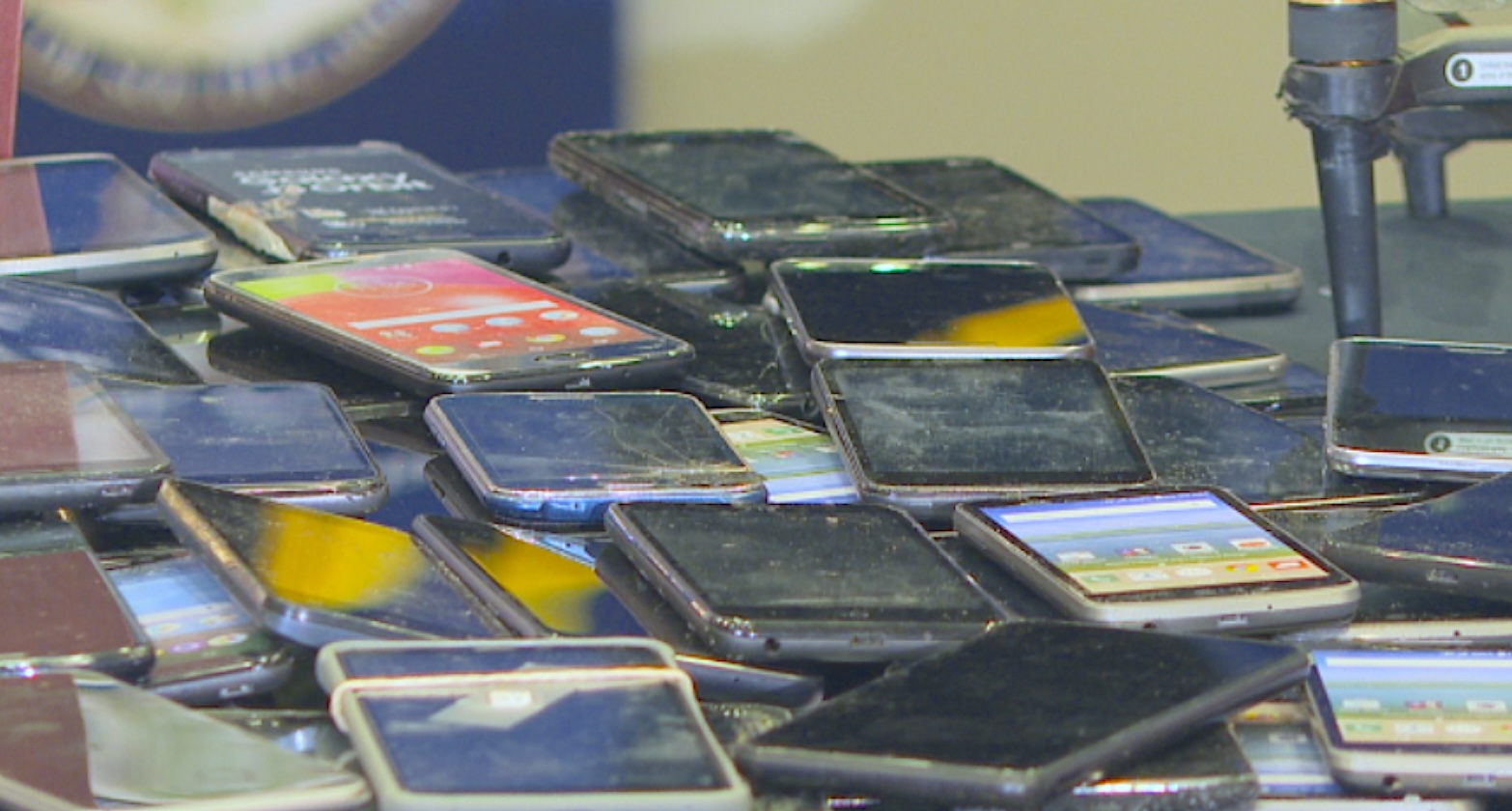
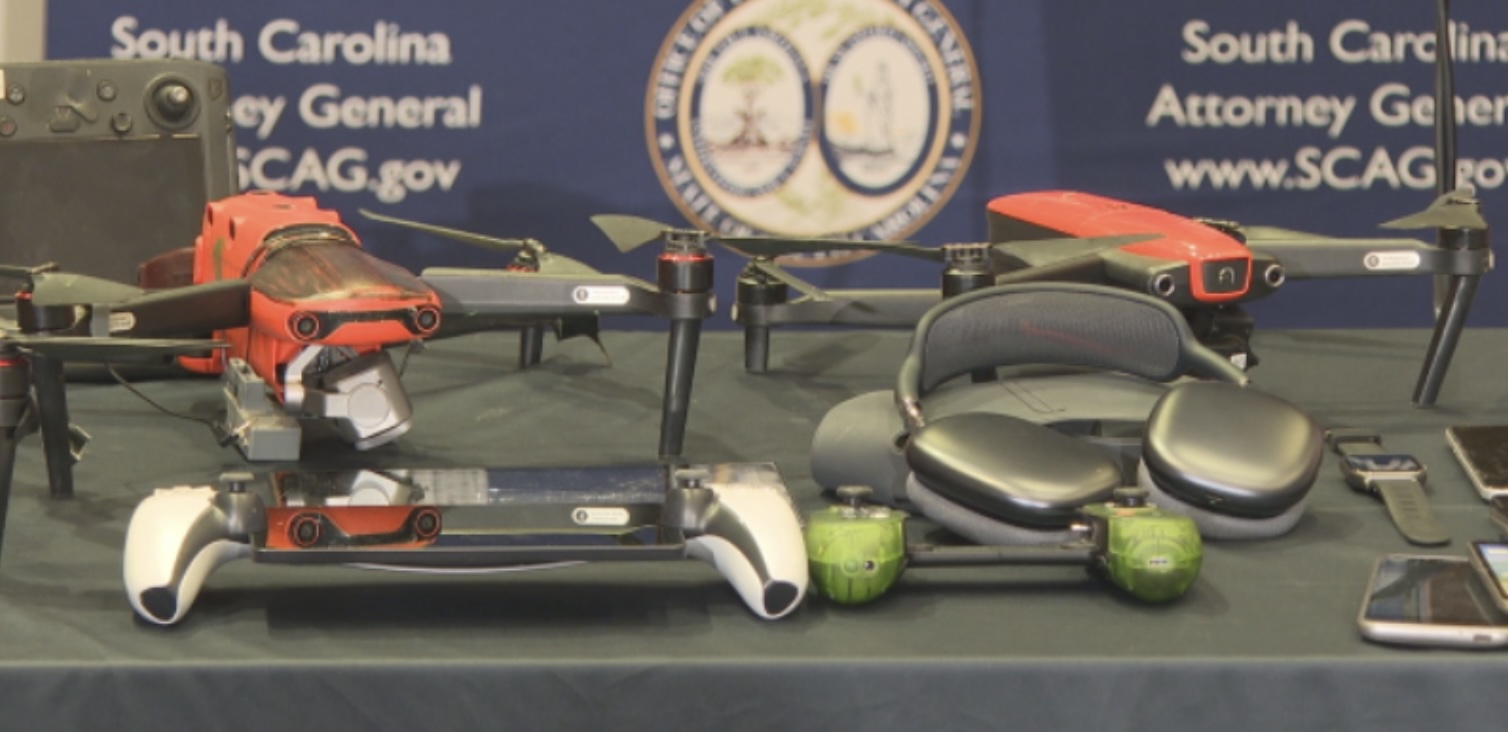
On November 18, FCC Chairman Brendan Carr stood in Columbia alongside South Carolina officials, surrounded by confiscated cellphones and drones used to smuggle contraband into prisons.
The following day, the FCC voted to open the door to jamming, because South Carolina clearly demonstrated a needed change federal policy.
The New Sheriff in Town
In the 1987 film The Untouchables, federal agent Eliot Ness pursued Al Capone’s criminal empire. Ness’s breakthrough didn’t come proving every murder or illegal transaction. It was finding an unexpected vulnerability…Capone’s taxes.
Federal authorities found a way to bring down the criminal kingpin by attacking the financial evidence behind his empire.
Nearly a century later, South Carolina has pursued a different vulnerability… this time, the communications.
While the FCC’s decision doesn’t mean South Carolina can simply flip a switch to jam cell phone communications from within its prison walls, the Department of Corrections and local authorities now have a pathway to get the necessary authorization, test equipment and demonstrate that legitimate communications outside prison grounds will remain protected.
Critics warn any jamming could interference with emergency communications and argue that incarcerated people must retain affordable, lawful ways to contact their families, but just as the government followed the money to take down Capone, South Carolina can now sever the connection that links incarcerated gang leaders and the criminal organizations they continue to command from within the prison walls of the Palmetto State.
No responses yet