
Sexual orientation is not a scandal. It is not a disqualification from public service any more than being left-handed. And someone’s position in elected office or the public eye does not entitle the rest of us to a tabloid inventory of their private life.
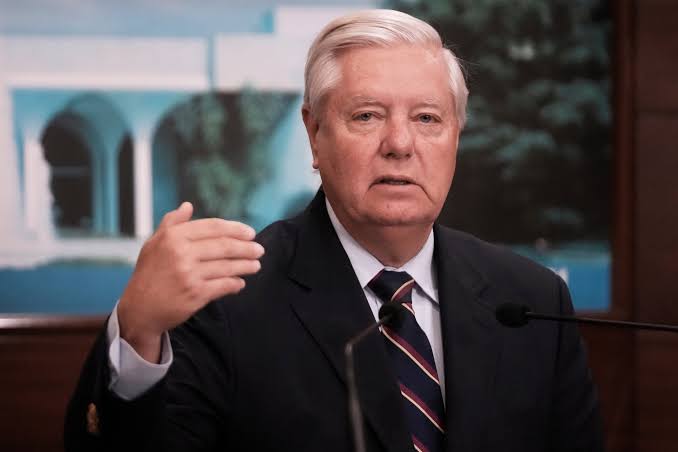
That’s where any discussion of The CLOSETocracy, the documentary released through The Young Turks about the late Sen. Lindsey Graham on October 22, must begin.
Privacy deserves protection. So do minors and all people subjected to coercion or exploitation. There is no contradiction here, unless we allow our politics to manufacture one.
Orientation
The 29-minute documentary features three people alleging paid sexual encounters with Graham. The filmmakers have published supporting materials, but The New York Times reported that it had not independently verified the participants’ identities or accounts.
None of us should presume to assign Graham a sexual identity. But if these accounts are true, and if he believed he could not be fully himself within his party, faith tradition, or community, that would reflect a painful constraint familiar to far too many people. For them, acceptance comes at the price of keeping some essential part of themselves out of view.
If Graham was in fact LGBTQ+ and had chosen to speak openly, that could have been consequential leadership. Someone with his standing could have helped others to find their voices and a home in whatever political party they chose. Young people, especially, might have seen a future in which belonging did not require concealment. That matters.
So does the example set when a public official supports restrictions on LGBTQ+ people’s lives. Those policies have consequences, whatever the official’s private circumstances, and there are legitimate questions about how public officials treat people whose lives they may privately understand better than they acknowledge.
Personal experience can deepen a leader’s understanding of the people affected by public policy. But the obligation to respect their rights exists whether or not that experience is shared.
A legislative record also deserves more careful examination than a headline permits. Votes can reflect constituents’ beliefs, party pressures, efforts to retain influence, and disputes over a bill’s language, scope, or legal consequences. Those considerations may help explain a decision without justifying it.
Assessing Graham’s record fairly, including his support for the 1996 Defense of Marriage Act and opposition to the 2010 “Don’t Ask, Don’t Tell” repeal, 2013 Employment Non-Discrimination Act, and 2022 Respect for Marriage Act, requires examining the legislation’s actual provisions, his votes, and his stated reasons, rather than assuming that an alleged private life explains every public choice.
Defending Graham’s privacy neither endorses his politics nor excuses the harm of policies that denied others equal dignity and freedom. Fairness is a standard we owe universally, not a declaration of allegiance. For people affected by policies restricting LGBTQ+ rights, the possibility that someone in power privately shared experiences he publicly helped stigmatize could carry considerable hurt and anger.
Yet recognizing that significance does not create an obligation for a leader to come out. Indeed, Graham publicly denied being gay, and these posthumous allegations do not authorize us to settle his identity for him. Whether to say anything further about his sexual orientation, if indeed there was anything to say, was his decision.
The principle is universal: privacy is not a privilege reserved for people whose politics we like. No one’s private life corresponds exactly to the version outsiders imagine. Every person, relationship, and household has dimensions others cannot fully know. The distance between a public impression and a private reality is not necessarily evidence of deception or wrongdoing.
One of the conservative movement’s deepest failings has been its presumption of authority over other people’s private lives: whom we date; whether, when, and whom we marry; our consensual choices within adult intimate relationships; our sexuality; and the decisions we make within our families. A movement that speaks so often about limited government has been remarkably reluctant to recognize a limit at the front door, much less the bedroom door.
That boundary has constitutional significance. In Lawrence v. Texas, the Supreme Court rejected the criminalization of private, consensual same-sex intimacy between adults, recognizing that moral disapproval alone did not justify the intrusion. The decision concerned limits on government power; the broader ethical question is whether we respect that privacy when the person exercising it is someone whose politics we oppose.
Now, the Right is hardly monolithic. Fiscal conservatives, religious traditionalists, libertarians, and MAGA populists share a coalition, sometimes uneasily, without sharing every conviction. Pew Research Center’s recent nine-group political typology documents substantial differences within the Right on social values, religion, and political leadership.
There are many conservatives for whom respecting private life is precisely what limited government should mean. Others defend privacy selectively, seeking legal restrictions on intimate decisions they would regard as deeply personal if the government were making them on their behalf. Some in the coalition also struggle to reconcile their restrictions on reproductive decisions with their resistance to public support and social infrastructure for families in the name of small government.
The criticism, then, belongs with those who claim the authority to expose others’ private lives and make intimate decisions for everyone else. And that intrusion does not become more defensible when it is directed at a conservative.
Nor does invoking hypocrisy give anyone license to turn a person’s intimate life into entertainment or a subject of mockery. A documentary can legitimately examine hypocrisy and possible exploitation while still inviting scrutiny of its own editorial choices. Would the same intimate details be necessary to establish hypocrisy or exploitation if the alleged encounters involved a woman? There’s nothing inherently shameful about consensual intimacy between adults, regardless of their sex, race, or sexual orientation. Invoking hypocrisy doesn’t justify portraying it as degrading. If the point is to humiliate someone for that intimacy, a documentary becomes little more than a Beltway production of a schoolyard taunt.
If the point is to humiliate someone for that intimacy, a documentary becomes little more than a Beltway production of a schoolyard taunt.
Whom someone loves and whether someone practices a faith do not establish fitness or unfitness for office.
How someone treats other people, and exercises power over them, is another matter. Public officials must answer for how they exercise power. Their votes and statements are fair subjects of scrutiny. And where reliable evidence establishes a conflict between an elected official’s private conduct and restrictions imposed on others through their position, reporting on that conflict may serve a legitimate public interest.
But the public interest lies in examining abuses of power, harmful conduct, and contradictions between the restrictions officials impose on others and the freedoms they privately exercise, not in making people answer for intimacy itself.
Exploitation
The documentary’s title, The CLOSETocracy, points toward sexual orientation, concealment, and alleged hypocrisy. But its allegations also raise a separate and legitimate public interest concern: one participant alleges that he was 17 at the time of the encounter, while acknowledging that he refused Graham’s request to see identification and verbally represented himself as 18.
This allegation is serious and presents a substantially different concern from prurient speculation about an adult’s sexual orientation. It deserves careful examination of the circumstances and applicable law. Lawrence itself expressly distinguished the consensual adult conduct before the Court from cases involving minors, coercion, or prostitution; it does not resolve the separate legal questions raised by these allegations.
More broadly, any credible allegation of coercion or exploitation warrants the same seriousness. In evaluating an alleged encounter between adults, the existence of a paid arrangement or apparent agreement does not resolve every question about coercion or exploitation. Differences in age, resources, and power deserve careful attention without prejudging what occurred in a particular encounter.
People who come forward must be heard respectfully and taken seriously. Delay alone does not discredit an account. Fear, shame, the prospect of challenging a powerful person, and any number of other factors can keep people silent for years. Some stay silent for a lifetime. Some reach a point where they can’t stay silent or conceal what they know any longer.
If accountability is the objective, then compassion, respectful questioning, and careful corroboration matter, both to the people making allegations and to the person accused.
Graham’s death makes that inquiry more difficult. He cannot dispute a recollection, explain a document, or offer his own account. His absence doesn’t bar legitimate reporting or extinguish anyone else’s right to speak, but it does make independent corroboration especially important, along with a clear account of what remains unverified.
People alleging exploitation deserve a fair hearing, and their accounts deserve the careful scrutiny that meaningful accountability requires.
The Countdown
And yes, we all own calendars. We recognize how close this release falls to November 3.
A documentary requires preparation; its publication date doesn’t establish when the reporting began. Without a documented production history, declarations about the producers’ motives deserve some restraint. Questions about timing are fair, but timing itself neither proves nor disproves an allegation.
The current candidates should also be judged on their own records. Every candidate in the current Senate race is responsible for their own conduct, qualifications, and decisions. Family relationship is neither a qualification for office nor evidence of wrongdoing, and voters should resist treating it as either.
In the end, this documentary will not by itself settle Sen. Lindsey Graham’s legacy. His lengthy public record provides substantial ground for scrutiny and assessment. And while substantiated evidence of misconduct will properly become part of that assessment, unresolved allegations should remain identified as unresolved.
There is room here for compassion for all people who have felt compelled to conceal themselves, for all those harmed by public policies, and for all those who have experienced exploitation. None should have to compete for our concern.
And none of the people involved should be manipulated as political instruments: the deceased politician reduced to an alleged secret, the people describing encounters reduced to campaign ammunition, and everyone else invited to choose a side before weighing all the available evidence. Whether an allegation is true matters long after its political usefulness has expired.
The next generation deserves better than a choice between concealment and public exposure. People should be able to live as openly as they choose, retain their privacy, and seek accountability and justice when they have been harmed, whether directly or through policy choices.
Those commitments must survive November 3.
Comments are closed